I was the founding product designer and first full-time hire. The product design role spanned many responsibilities, from product leadership (leading product signal meetings, facilitating design-thinking workshops) to marketing and growth (developing an external-facing website, exploring and implementing product-led growth opportunities, planning conference content and swag) to customer success (managing conversion during proof-of-concept trials), to, of course, UX/UI design (end-to-end discovery, persona development, wireframing, and high-fidelity pixel pushing). It's been a lot of work and a lot of hats, but the impact and growth I've experienced through this is what makes startups fulfilling!
Our Third-Party Risk Manager (TPRM) is responsible for risk review and reporting for their organizations.
They are often under-resourced and over-worked, handling due diligence onboarding for hundreds of vendors while juggling increased regulatory requirements, continuous monitoring needs, and various stakeholder reporting.
Their work is important, but the people they work with often just see them as a “roadblock” against onboarding vendors, and it's hard to show value when they're often just asked to “observe and report” findings, rather than be empowered to make decisions with evidence.
A world where risk review and reporting become automated, consistent, and continuous for TPRMs
A risk manager's biggest headaches revolve around vendor due diligence questionnaires. Here's how we listened, and how we make things better.
Even with one clear persona: "a Third-Party Risk Manager (TPRM) at a scale-up", we quickly learned there isn't just one way they want to use our product. Here's how we held onto a strong product opinion while still allowing flexibility.
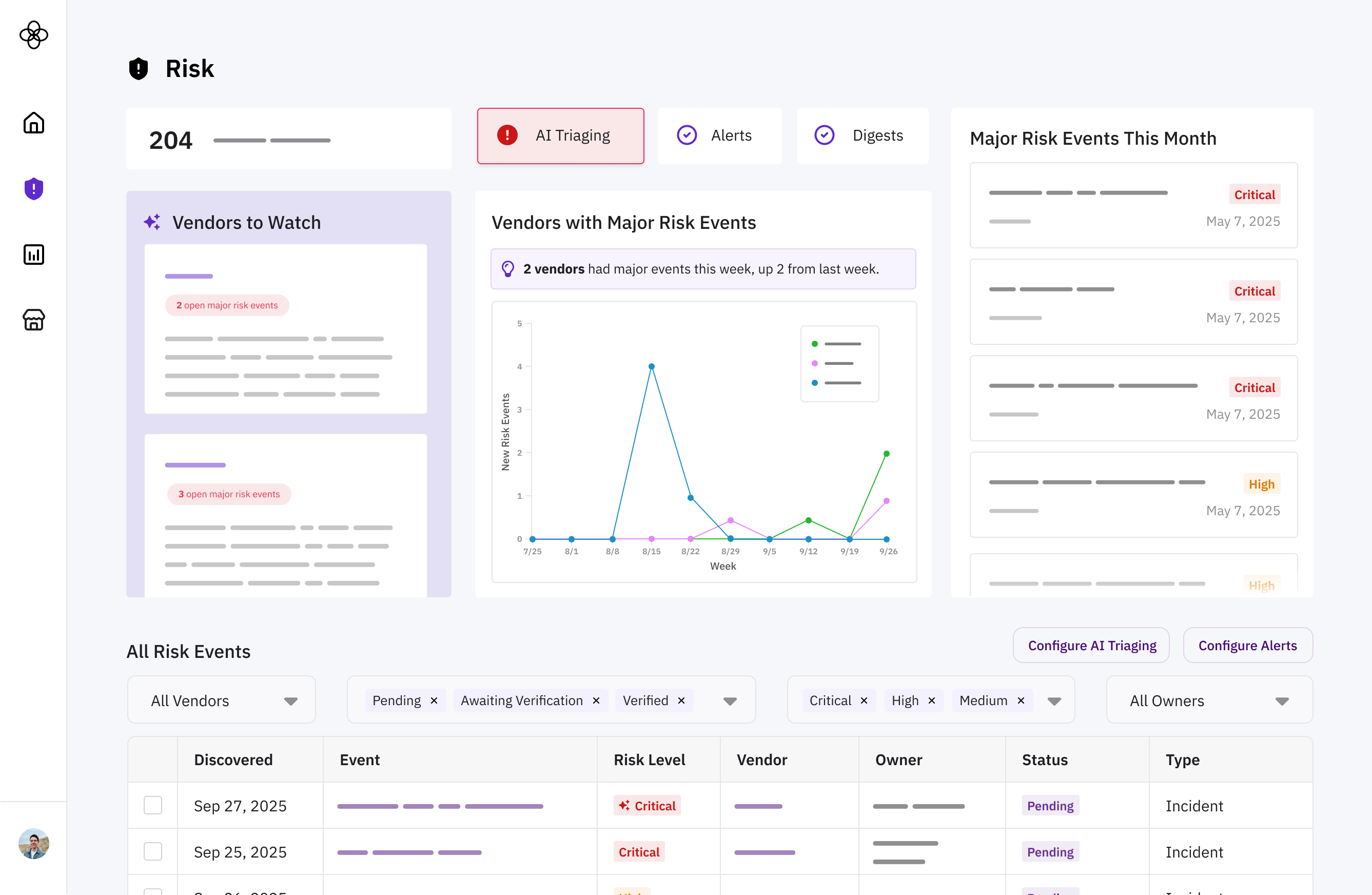
Every person with an idea wants to “build an app”, and every person with an app wants to “build a dashboard”. How might we make sure a dashboard isn't just a pile of pretty graphs?